
The Live Show Formula: Moments That Move Tickets & Merch
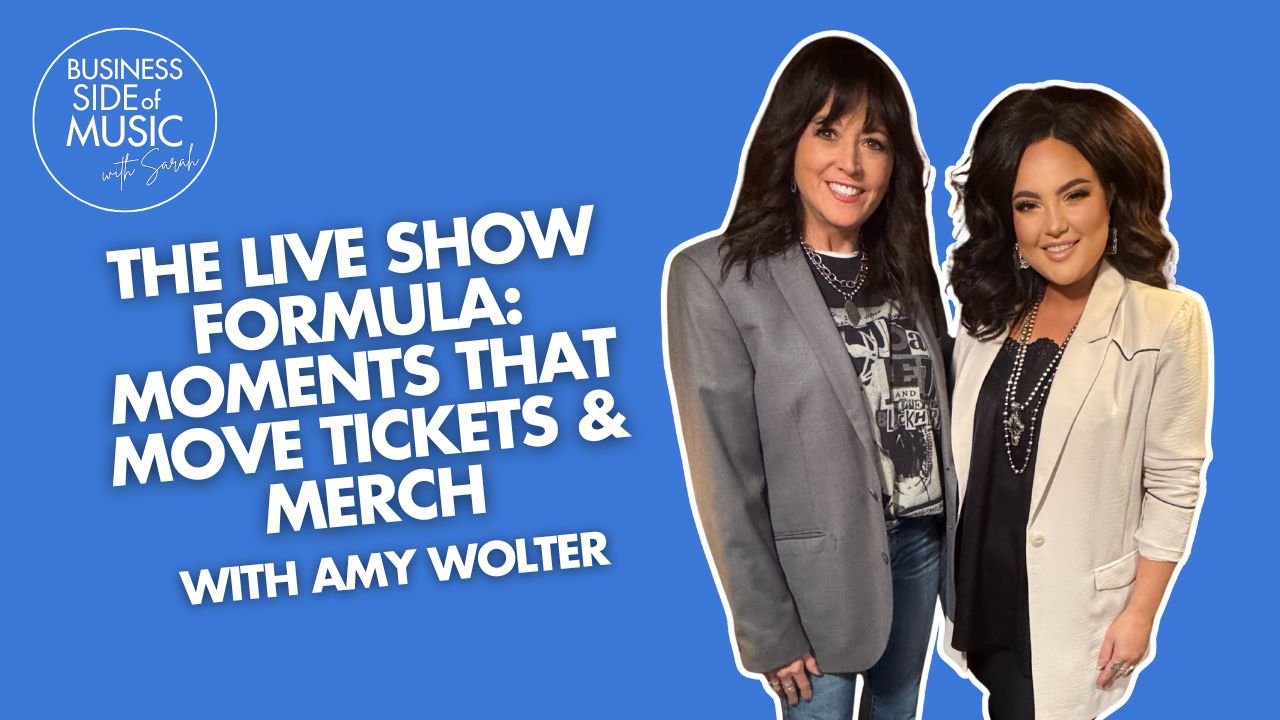
What separates a good live performance from a show that builds lifelong fans?
In this episode of Business Side of Music, I sat down with live music producer Amy Wolter of Tom Jackson Productions to break down what truly makes a live show work — not just artistically, but financially.
If you’re an independent artist, manager, or music professional, this conversation will challenge the way you think about touring, stage presence, and audience connection.
Because here’s the truth:
Streams introduce you.
Your live show builds your business.
Why Artists Miss the Mark on Stage
One of the biggest misunderstandings artists have is believing audiences come to a show just to hear songs.
They don’t.
They can listen to your music anywhere — Spotify, Apple Music, YouTube. What they can’t get anywhere else is the experience.
Audiences come to:
Feel something
Laugh
Cry
Sing along
Be seen
Go on a journey
If a show doesn’t deliver that, they move on.
Live performance isn’t just about playing well. It’s about creating intentional moments.
The First 30 Seconds Matter More Than You Think
Amy explains that audiences make snap judgments almost immediately.
In the first 30 seconds, they’re asking:
Do I trust this artist?
Do they belong on this stage?
Am I in good hands?
This is where stage authority comes in.
Authority isn’t arrogance. It’s confidence.
And confidence comes from preparation.
If you’re thinking about what song is next, what you’re going to say, or what you should be doing with your hands, you’re focused on yourself — not the audience.
The more prepared you are, the more present you can be.
And presence is what connects.
Designing a Setlist That Takes the Audience on a Journey
Most artists build setlists in the green room five minutes before showtime:
Fast song.
Slow song.
Another fast one.
But there’s a method to creating a show that actually moves people.
Amy breaks down the concept of building “moments” into a live set:
Touching moments (emotional songs, intimate storytelling)
Musical moments (instrument solos, dynamic builds)
Audience participation moments (sing-alongs, call-and-response)
Energy shifts that allow songs to breathe
Sometimes the difference between a good performance and a great one is simply allowing space — letting a lyric land, holding a pause, repeating a bridge before the final chorus explodes.
Rushing through songs kills impact.
Intentional arrangement creates chills.
The Smallest Change That Creates Massive Impact
If you take only one practical tip from this episode, let it be this:
Make direct eye contact.
Not scanning the room.
Not looking at your hands.
Not staring into the lights.
Looking someone in the eye and finishing a phrase.
Artists Amy has worked with have seen immediate results just from this one change:
More people coming to the stage
Higher merch sales
Promoters rebooking them
Fans staying afterward to talk
People remember when they feel seen.
And connection builds loyalty.
90–95% of Artist Income Comes From Live Performance
Here’s a statistic that should shift your priorities:
The majority of an artist’s income comes from live performance — touring, ticket sales, and merch.
Yet it’s the area most artists invest the least time and money into improving.
Artists spend thousands on recording and promotion, but walk on stage without a plan.
If your live show improves:
Ticket sales grow
Merch sales increase
Fans return
Word-of-mouth spreads
Social content improves organically
Your show isn’t just art.
It’s infrastructure.
The Teachable Artist Wins
Amy left us with one powerful piece of advice:
Don’t become unteachable.
No matter your age, genre, or career stage, growth only happens when you remain open.
The artists who keep evolving their live performance are the ones who build sustainable careers.
Because great shows don’t happen accidentally.
They’re designed.
Want to Improve Your Live Show?
Amy Wolter works alongside Tom Jackson at Tom Jackson Productions, helping artists create intentional, engaging live performances using the Live Music Method.
You can learn more, book sessions, or grab the book at:
👉 OnStageSuccess.com
If you’re serious about building a career in music, start treating your live show like the business engine it is.
Moments move people.
And moved people buy tickets, merch, and come back again.
—
For more music business insights, subscribe to Business Side of Music and follow along on social media for weekly strategy and industry conversations.
